

Processed and Ultra-processed foods
A modern food guide: Understanding the NOVA system and its link to obesity
AliAraghi, MD.
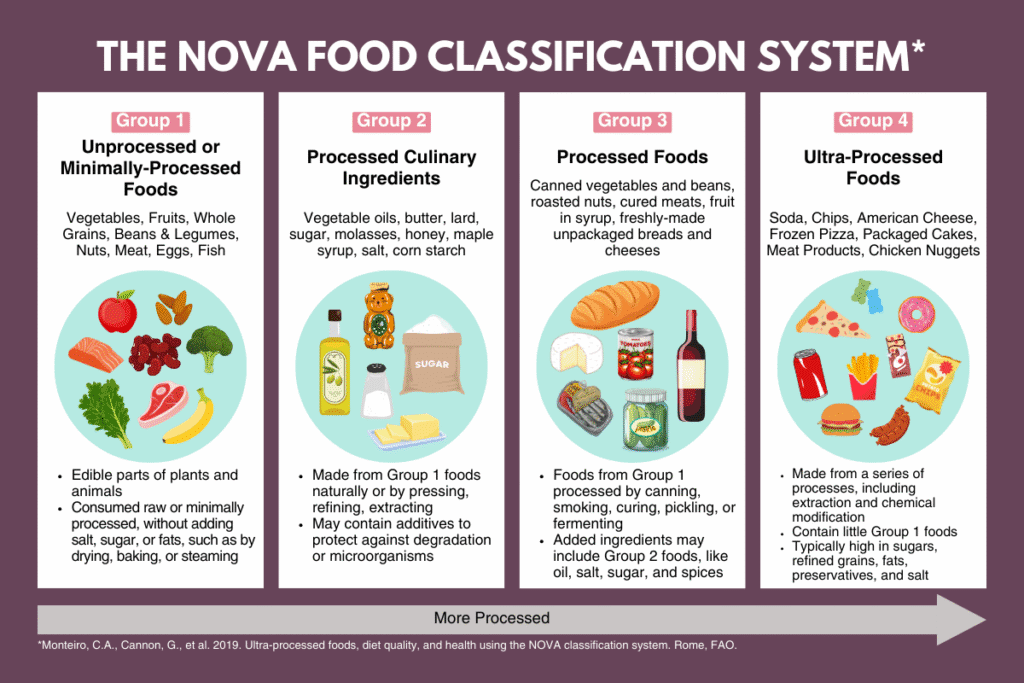
Have you ever stopped to consider how the food on your plate ended up there? The
journey from farm to fork has become a lot more complex for many items we
consume daily. To help us understand this, researchers created the NOVA
classification system, which sorts foods into four groups based on their degree
of processing. Looking at our food through the lens of NOVA can shed light on
why many of us struggle with weight and other chronic health issues.
The four groups of NOVA
Instead of focusing only on nutrient content, the NOVA system emphasizes how and why a
food has been altered. The four categories are:
Group 1: Unprocessed or minimally processed foods. These are foods in their natural state or have been slightly altered without the addition of ingredients like salt or sugar. This includes fresh, frozen, and dried fruits and vegetables, as well as meat, eggs, and dairy products such as milk.
Group 2: Processed culinary ingredients. These are ingredients such as oils, butter, sugar, and salt, which are derived from Group 1 foods or natural sources. They are not meant to be eaten on their own but are used to cook and season other foods.
Group 3: Processed foods. This category includes simple products made by combining Group 2 ingredients with Group 1 foods to extend their shelf life or enhance their taste. Examples include canned
vegetables, cheeses, and freshly baked bread.
Group 4: Ultra-processed foods (UPFs). This is the category we should be most concerned with. UPFs are industrial formulations made primarily from inexpensive ingredients and additives, with little to no intact Group 1 foods. Think of sodas, packaged snacks, instant noodles, and sugary breakfast cereals
The obesity link: How UPFs hijack our biology
Studies have consistently shown a strong association between a high intake of
ultra-processed foods and an increased risk of obesity. This is not simply
because UPFs are often higher in calories. Their very design encourages overconsumption through several powerful mechanisms:
Engineered for overeating: UPFs are crafted in labs to be “hyper-palatable.” They have the perfect combination of fats, sugars, and salt to create a taste that our brains find irresistible, overriding our natural satiety signals. This makes it easy to eat a whole bag of chips or cookies without feeling full.
Rapid consumption: The textures of many UPFs, like soft buns and crispy snacks, make them easy to chew and swallow quickly. This means we consume a lot of calories before our brain has time to register that we are full.
Nutritionally unbalanced: UPFs are typically high in calories, unhealthy fats, and added sugars but low in protein and fiber.
Fiber and protein are crucial for feeling full. When we don’t get enough, our bodies continue to send hunger signals, prompting us to eat more.
Displacing whole foods: The convenience and low cost of UPFs often lead to them replacing more nutritious, minimally processed foods in our diet. This shift crowds out the fiber, vitamins, and minerals
that our bodies need for healthy functioning and metabolism.
Making smarter choices
The NOVA classification is not about fearmongering or suggesting that all processed food is bad. Rather, it is a tool to help us understand our diets and make more informed decisions.
Here’s what you can do:
Prioritize Group 1 foods: Build your meals around fresh fruits and vegetables, whole grains, and lean proteins.
Cook with Group 2 ingredients: Use culinary ingredients like olive oil, salt, and spices to prepare your
meals at home.
Be mindful of Group 3: Don’t fear all processed foods. Canned beans or frozen vegetables can be a healthy and convenient option. Just check the labels for excessive added sodium or sugar.
BOOK YOUR APPOINTMENT TODAY, CALL 770-284-3043 TO START YOUR WEIGHT MANAGEMENT PROGRAM